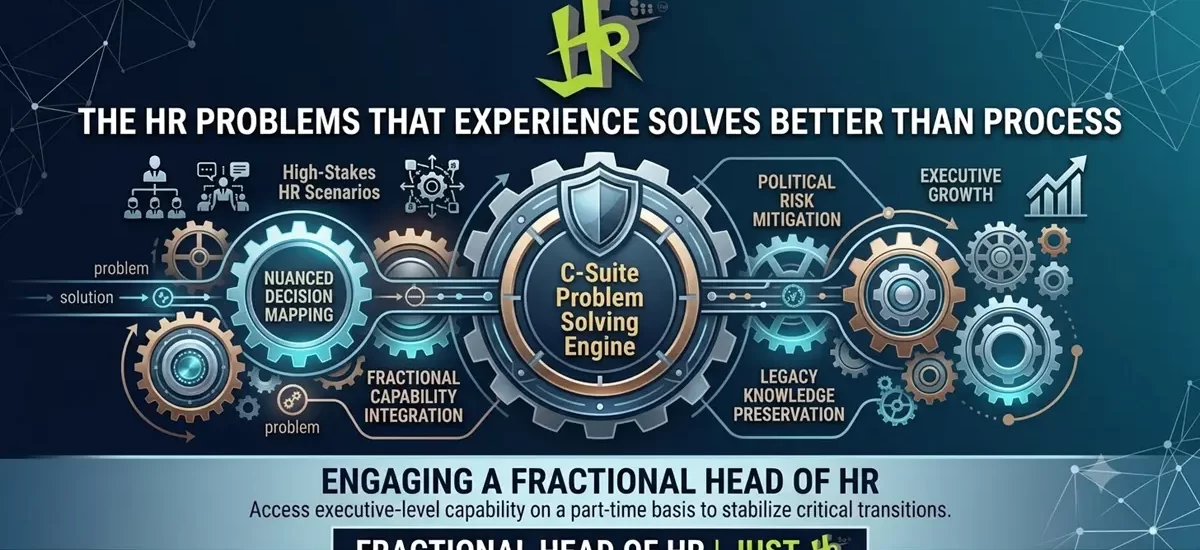
Process is essential for scaling an organisation, but it has a hard limit. While standard operating procedures (SOPs) handle routine payroll, onboarding checklists, and basic compliance, they crumble when faced with high-stakes human complexity.
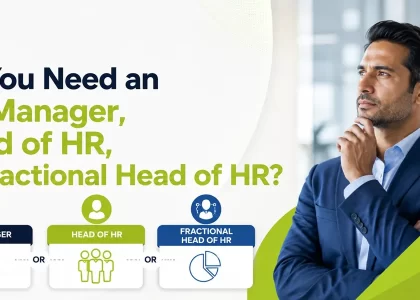
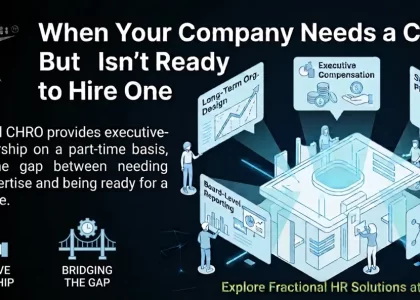
When people problems become nuanced, unpredictable, and politically sensitive, process offers a blueprint, but experience provides the navigating hand. Senior HR leadership brings seasoned judgment that software and handbooks cannot replicate. Engaging a Fractional Head of HR allows growing organizations to access this level of executive capability without the full-time overhead.
Navigating Executive Exits and Succession Planning
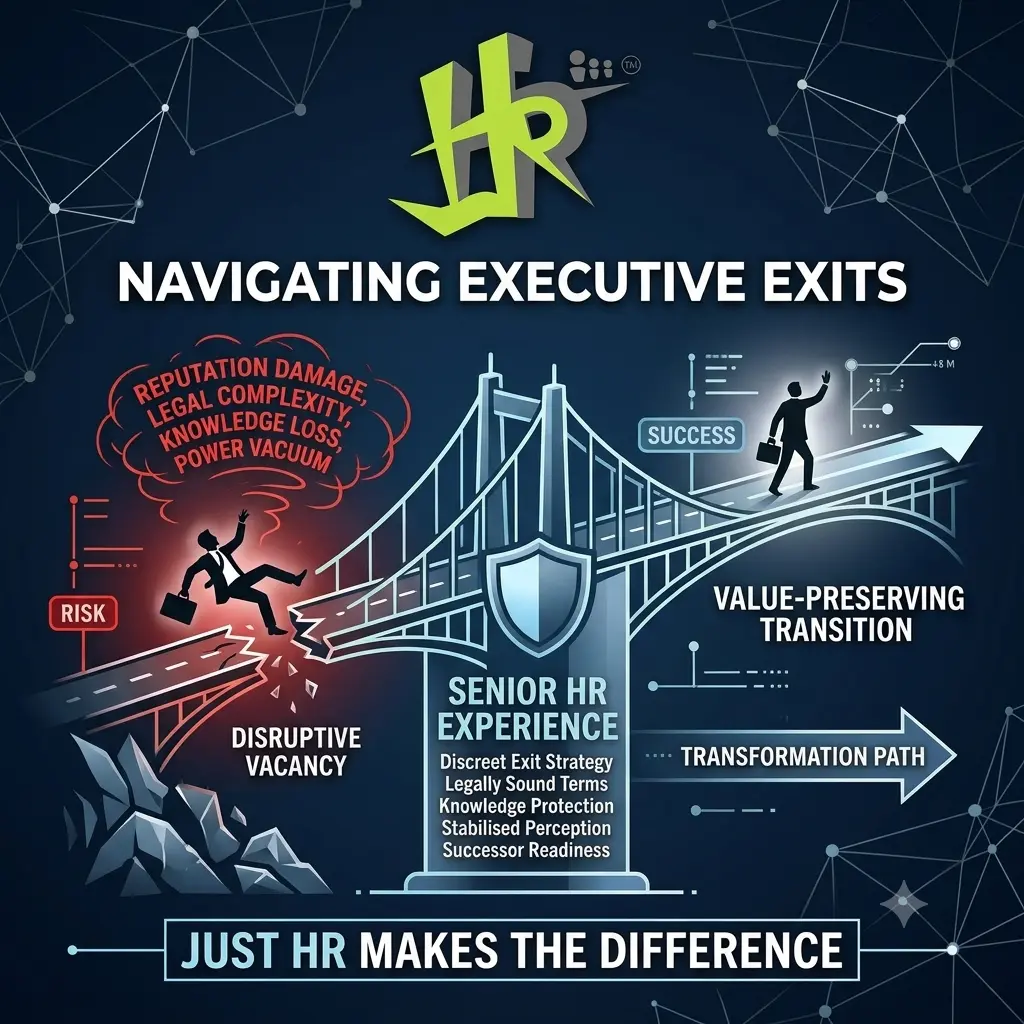
When a C-suite executive departs, the risk extends far beyond filling an open position. Managing executive exits requires discretion, legally sound severance negotiations, and swift reputation management. Senior HR experience ensures transition plans protect institutional knowledge and stabilise market perception while preparing high-potential internal successors to step up without creating power vacuums.
A strong C-suite departure strategy transforms a potentially disruptive leadership vacancy into a seamless, value-preserving transition.
Resolving Founder, Employee, and Leadership Conflict
Conflict at the executive level threatens company culture and strategy. Founders often hold deep emotional attachments to their vision, which can clash with operational leaders seeking structure. An experienced HR leader acts as an objective advisor, mediating tensions through contextual judgment rather than rigid, punitive policy. They balance visionary ambition with practical talent retention.
Managing Toxic High Performers and Weak Managers
Standard performance frameworks fail when the company’s top revenue driver creates a toxic work environment. Junior HR teams often rely on boilerplate performance improvement plans (PIPs) that miss systemic risks. Senior HR professionals recognize pattern behaviors early, helping leaders weigh short-term output against long-term cultural damage to make decisive, firm interventions.
Designing Strategic Restructuring and Organisational Models
Reorganising business units or conducting layoffs requires far more than operational execution. Organisational design demands a deep business understanding to align talent structures with revenue goals. When scaling through complex transitions, bringing in a Fractional Head of HR provides the strategic oversight needed to execute structural shifts with minimal friction and maximum empathy.
Structuring Complex Compensation Strategies
Designing competitive, equitable compensation packages involves navigating equity structures, variable pay, market benchmarks, and internal parity. Senior HR judgment balances financial runway constraints with talent retention needs, ensuring executive compensation models drive business performance rather than entitlement.
Executive Hiring and Difficult Employee Decisions
Hiring senior leaders requires evaluating cultural alignment, strategic leadership capabilities, and long-term potential beyond a resume. Likewise, making hard termination or redundancy decisions demands sophisticated risk assessment and refined executive communication to maintain remaining team trust and limit legal exposure.
Protecting Culture and Building Organisational Resilience
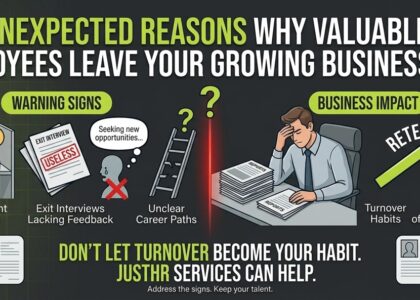
Culture is not a poster on a wall; it is shaped by daily leadership behaviors and decisions under stress. Experienced HR leaders read subtle shifts in employee engagement, address hidden burnout, and advise leadership on how operational changes impact long-term retention. Working with a Fractional Head of HR gives mid-market firms the insight needed to build resilient workplace cultures during periods of fast growth.
Process vs. Senior Experience in HR Management
| HR Challenge | The Process Approach | The Senior Experience Approach |
| Executive Departure | Standard offboarding checklist and exit interview. | Discreet exit negotiations, stakeholder communication, and succession strategy. |
| Leadership Conflict | Mandatory HR mediation or formal policy warnings. | Contextual coaching, root-cause mediation, and executive alignment. |
| Toxic Top Performer | PIP documentation or delayed action due to high output. | Objective risk analysis, leadership coaching, and decisive cultural protection. |
| Restructuring | Standard severance templates and generic comms. | Strategic org design, legal risk mitigation, and empathetic change leadership. |
Why Senior HR Judgment Is Irreplaceable
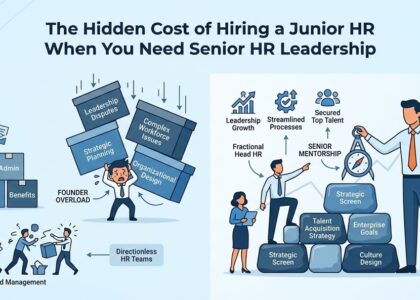
Process documents what should happen under normal conditions; senior HR experience knows what to do when conditions are anything but normal. Through pattern recognition, business acumen, and nuanced stakeholder management, seasoned HR partners turn high-risk talent crises into stable, long-term operational advantages.
When off-the-shelf policies aren’t enough to solve complex human challenges, bringing in flexible expertise through a dedicated Fractional Head of HR gives growing businesses access to senior judgment. Learn more about our approach on our About Us page or read our real-world impact in our Case Studies.
Frequently Asked Questions
1. Why can’t standard HR processes solve leadership conflicts?
Standard HR processes focus on policy enforcement and formal grievances, which often escalate tension among executives. Senior HR experience brings neutral mediation, business context, and emotional intelligence to address root causes without disrupting operations.
2. How does a senior HR leader handle a toxic high performer?
Rather than hiding behind metrics or enforcing generic PIPs, an experienced HR leader conducts a total-risk assessment. They quantify the cultural and financial costs of toxic behavior, coach the individual, and advise executives on making firm decisions that protect the team.
3. What is the main difference between an HR generalist and a senior HR leader?
An HR generalist excels at executing established processes, compliance, and administration. A senior HR leader brings pattern recognition, risk assessment, strategic organisational design, and the authority to guide C-suite decision-making.
4. How does senior HR experience support business restructuring?
Senior HR leaders look beyond immediate headcounts. They align organizational structure with financial goals, manage legal and operational risks, draft executive communications, and lead the remaining workforce through cultural change.
5. When should a growing business hire a Fractional Head of HR?
Companies scaling rapidly, undergoing restructuring, or facing high-stakes executive decisions often need high-level strategic guidance before needing a full-time Chief People Officer. A Fractional Head of HR delivers that senior judgment on a flexible, cost-effective basis.
Have a people problem that needs senior judgment? Connect with JustHR to bring experienced leadership to your executive team.