Introduction
Table of Contents
Did you know? In 2024, job scams led to over $500 million in losses across the U.S. alone and LinkedIn has become one of the prime hunting grounds for fraudsters. A deceptive job ad is not a mere inconvenience but a possible drain on your finances, information and even a halted career.
Fake job postings on LinkedIn have become a growing problem that threatens job seekers worldwide. The purpose of these scam listings can often be to steal your personal information, waste your precious time or even delude you into handing over cash.
This article will guide you through practical, clear signs to identify scams and how to take steps to stay safe.
Understanding the Rise of Fake Job Posts on LinkedIn
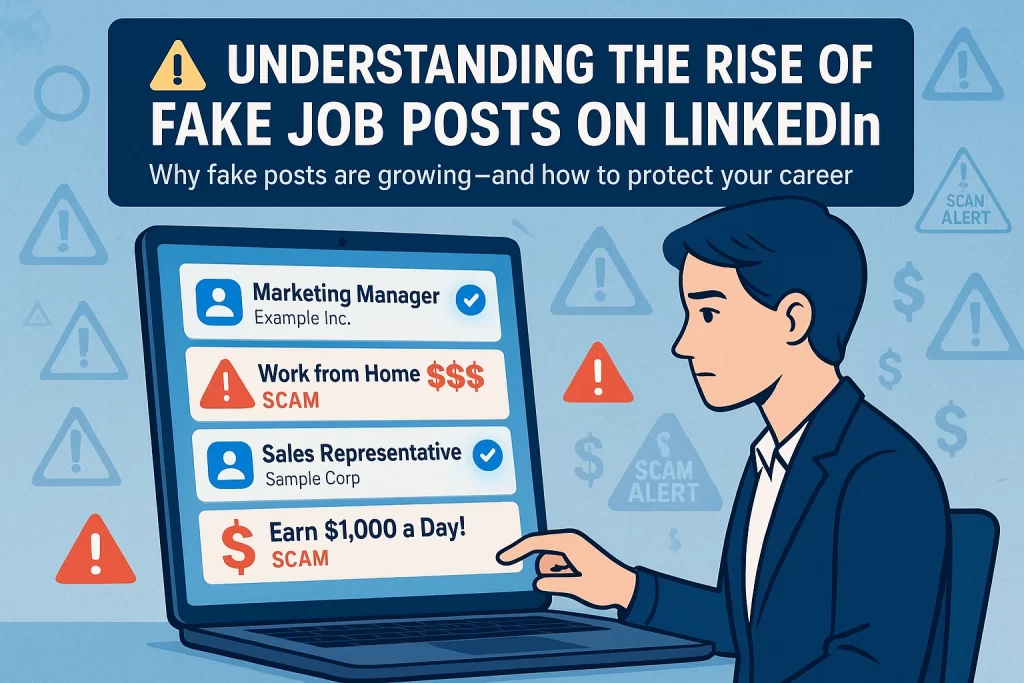
LinkedIn is a top platform for professionals looking to grow their careers, which scammers have noted and exploited. The sheer number of users on the platform as job seekers presents the platform as a lucrative target of fraudsters who would like to defraud people with bogus job opportunities or bogus recruiter profiles.
These scams often involve posing as real recruiters or established companies. They create ghost listings, showing fake jobs with appealing salaries and perks. An easy trick is to shift communication off-platform as soon as possible, through WhatsApp, texts or email, where the controls and detection of LinkedIn policies never come into play.
Expert Opinions
“Scammers are getting smarter, using AI tools to build fake recruiter profiles and even deepfake interviews. Job seekers need to stay one step ahead by verifying every detail.”
— Ilene Rein, Recruitment Expert
Job scam cases have nearly tripled since 2020. In 2024 alone, text-based job scams cost Americans $470 million. With more jobs going remote, scammers find it easier to run their deceit without location restrictions. Fake job posts not only cause financial harm but also can damage reputations and derail genuine career efforts (source).
Key Warning Signs to Identify Fake Job Posts on LinkedIn
Recognizing fake job posts quickly can save you from headaches and losses. Here are the major red flags to watch for.
“Too Good to Be True” Offers and Vague Job Descriptions
If a job promises a sky-high salary for minimal skills or experience, approach with caution. Scammers lure you in with promises of huge pay for basic or no qualifications. For example:
Suspicious: “Earn $10,000/week working from home with zero experience. Apply now!”
Legitimate: “Seeking Marketing Specialist with 3+ years’ experience to manage social media campaigns. Salary: $50k-$70k depending on experience.”
Vague or generic job descriptions full of buzzwords but lacking real specifics on duties or expectations are often a sign of a fake offer.
Missing or Unverifiable Company Information
Legitimate job posts will clearly state the company’s full name, official website, and active LinkedIn page. Scams usually feature:
- No company website or one that’s poorly designed and vague.
- Recruiter profiles that are newly created or have incomplete information.
- Inconsistent or missing company data online.
If you cannot verify the company or recruiter independently, it’s a red flag. You should know about this issue to Spot Fake Job Posts on LinkedIn.
Unprofessional Communication and Early Requests for Sensitive Information
Be alert to bad grammar, misspelling or even messages dispatched on personal email accounts such as Gmail or Yahoo rather than company domains. Legitimate employers:
- Use clear, professional communication.
- Avoid asking for Social Security numbers, bank details, or other sensitive data until after formal job offers and contracts.
Any early request for such info is a warning sign to stop and verify.
Suspicious Interview and Hiring Processes
Recruiters who only conduct interviews through messaging apps or text, avoiding video or phone calls, should raise concern. Most real companies conduct at least one video or phone interview. Also, watch for:
- No formal interview stages.
- Pressure for fast decisions without proper assessments.
- Requests for “processing” payments or fees for training or equipment.
Legitimate hiring processes do not require payment from candidates.
Requests for Money or Unsolicited, Impersonal Contact
Never pay a recruiter or company fees for job applications, equipment, or training. If you receive a message from someone unknown to you that feels generic or like a mass message asking you to apply or click a link urgently, avoid it.
Also, if the job listing is not found on the company’s official LinkedIn page or website, be cautious.
❌ Myths vs ✅ Facts: LinkedIn Job Scams
| Myth | Fact |
| If a job is posted on LinkedIn, it must be legitimate. | Scammers create fake recruiter accounts and ghost job listings—even on LinkedIn. Always verify before applying. |
| Legit recruiters will never contact you via WhatsApp or Gmail. | Many scammers insist on moving chats off LinkedIn. Genuine recruiters may email, but always from an official company domain. |
| High salaries with no experience required are just “lucky breaks.” | They’re usually scams designed to lure desperate job seekers. Real jobs list specific skills, experience, and clear duties. |
| It’s okay if a recruiter asks for money—it’s for “training” or “equipment.” | Red flag! Real employers never charge candidates. Any request for payment = scam. |
| A profile with a photo and job title means it’s a real recruiter. | Scammers now use AI-generated images and deepfake profiles. Check connections, work history, and endorsements. |
| If you gave personal info once, nothing bad can happen. | Even minimal data (phone, email, ID scans) can be sold on the dark web or used for identity theft. Always stay cautious. |
How to Protect Your Career from Fake Job Posts on LinkedIn
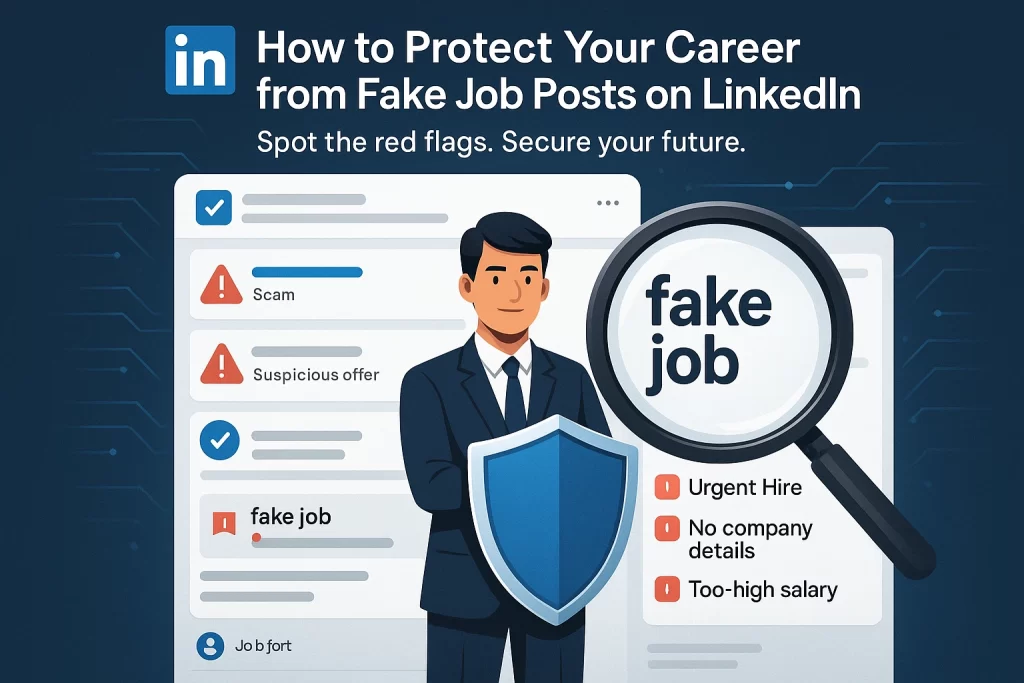
Staying safe on LinkedIn requires vigilance and knowing what checks to make before sharing your data or engaging with a recruiter.
Verifying Company and Recruiter Authenticity
- Search for the company’s official website and LinkedIn page.
- Look up company reviews on sites like Glassdoor.
- Check the recruiter’s LinkedIn profile for a detailed history and connections.
- Contact the company directly through verified phone numbers or emails, not through suspicious messages.
If something doesn’t add up, avoid responding further.
Best Practices for Safe Job Applications
- Never share sensitive info like Social Security numbers or bank details upfront.
- Use LinkedIn’s messaging system and confirm interview details.
- Enable two-factor authentication on your LinkedIn account to prevent unauthorized access.
- Trust your instincts—if an opportunity feels suspicious, step back.
Reporting and Responding to Suspicious Job Posts
LinkedIn allows users to report fraudulent job posts. Reporting helps protect others from falling into scams. You can also report to government bodies like the Federal Trade Commission (FTC).
Sharing your knowledge of scams with friends or professional groups helps create awareness and build a safer community (source).
Expert Opinions and Case Studies on LinkedIn Job Scams
Recruitment expert Ilene Rein points out that fake job listings disrupt the labor market and increase mistrust. Cybersecurity pros warn that scammers are now using AI tools to make fake recruiter profiles and even conduct deepfake interviews, complicating scam detection (source).
Case Study:
Jessica, an experienced marketer, responded to a LinkedIn post promising a remote senior role with great pay. The recruiter’s profile was new, and the interview consisted only of text messages. They requested to have personal documents early and to pay $200 as license to train on software. Jessica checked and proven the existence of such a post in the company and notified LinkedIn about the post. The warning helped her to avoid instances of identity theft and loss of money.
LinkedIn Job Safety Checklist

Get A Copy Of This Checklist
FAQs About Fake Job Posts on LinkedIn
1. How can I quickly tell if a LinkedIn job post is fake?
Look for vague job descriptions, unrealistic salaries, missing company details, and recruiters with empty or new profiles. If communication moves off-platform too soon, that’s another red flag.
2. Do legitimate companies ever ask for money during hiring?
No. Genuine employers never ask candidates to pay for applications, training, or equipment. If money is requested, it’s a scam.
3. What should I do if I already applied to a suspicious job?
Stop communication immediately. Do not share further details. Report the listing to LinkedIn and monitor your accounts for unusual activity if you shared personal information.
4. How do I verify a recruiter’s authenticity?
Check their LinkedIn profile for history, connections, and endorsements. Cross-check the company’s official careers page. You can also call or email the company directly using verified contact details.
5. Can scammers conduct interviews on LinkedIn?
Yes, but they usually avoid video or formal calls. Most fake recruiters stick to chat or text. If an “interview” is only via WhatsApp or email with no professional process, it’s likely fake.
Conclusion
Fake job posts on LinkedIn are increasingly common and often highly sophisticated. Learning how to spot fake job posts on LinkedIn is crucial in protecting your career and personal data. Watch for too-good-to-be-true offers, vague descriptions, unverifiable companies, poor communication, suspicious interview processes, and requests for money or sensitive information.
Always check recruiter and company information and follow your sense. In case of uncertainty, signal the suspicious activity to LinkedIn and the law enforcement. This knowledge can be shared in order to make the community of professionals safe and trustworthy.
Stay alert and keep your career secure by applying these tips every time you search for jobs on LinkedIn.
For More information, Visit JustHr