
Table of Contents
Introduction
Did you know that over 90% of recruiters check LinkedIn before even looking at a resume, but 99% of companies still require a resume for formal applications?
The tools we use for job hunting keep evolving—and so do employer expectations. By 2026, the job search looks very different from just a few years ago. That’s why professionals everywhere are asking: LinkedIn vs Resume—do you really need both?
The short answer: yes. While both tell your career story, they serve very different purposes in today’s AI-driven hiring market. This post will deconstruct the new trends of hires, provide knowledgeable information, and offer you tips and tactics to help you understand how and why this tool or that tool is important to your career success.
How Hiring Works in 2026
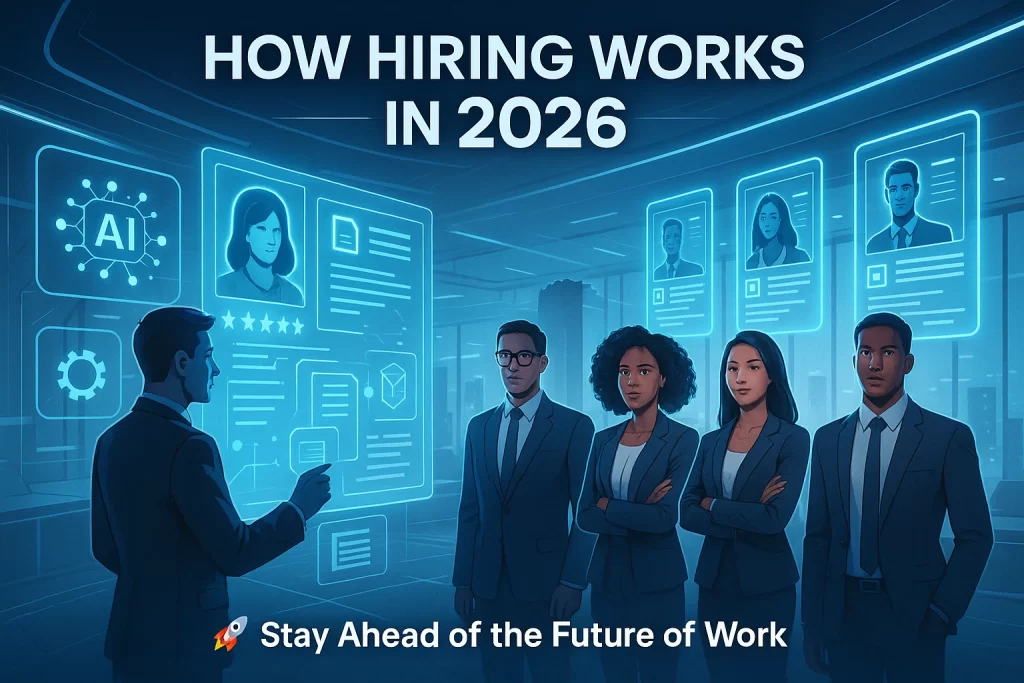
Hiring has become a deeper mix of technology and human insight. Automated systems, smart applicant tracking systems (ATS), and artificial intelligence now scan resumes before a person even sees them. Employers are also more likely to focus on what skills you have learned on the job, instead of just looking at degrees.
Remote and hybrid roles have expanded the pool of candidates. Now, recruiters often start their search online before seeing a resume. They consider professional networks, individual projects and online lives. LinkedIn is not a profile, it is your resume to anyone seeking talent in the world.
Yet, resumes still matter. Most companies use ATS to filter applicants, so a resume built with the right keywords is required for both big corporations and fast-growing startups.
For the latest hiring trends, including how recruiters sift through applications and what job seekers should focus on, see The 5 Hiring Trends You Need to Know for 2025.
What Recruiters Scan First
- LinkedIn for background, endorsements, and personal recommendations.
- Resumes for exact role fit and proof of skills matched to the job.
- Digital presence for professionalism and culture fit.
Comparing LinkedIn Profiles and Resumes
LinkedIn and your resume have different jobs, even if they tell parts of the same story. Use your LinkedIn profile as your billboard. It is wide, social, and networking. Recruiters observe current skills, recommendations, projects, and written content that you post.
Your resume, on the other hand, is a targeted document. It gets customized for each job you apply for. It has clear formatting, strong action verbs, and focuses on matching the job description exactly using keywords (so that ATS software doesn’t filter you out).
Key Differences at a Glance
| Feature | LinkedIn Profile | Resume |
| Audience | Public (recruiters, peers, companies) | Private (employers, hiring managers, ATS) |
| Format | Dynamic, open, multimedia | Static, formal, one to two pages |
| Networking Tool | ✅ Yes | ❌ No |
| ATS compatibility | ❌ No | ✅ Yes |
| Customization | Broad, updated regularly | Tailored to each role |
Think of it like this: your LinkedIn profile is your storefront on a busy street, while your resume is your tailored sales pitch to a key customer. This is one of the major things you should know about LinkedIn and the resume difference.
Recruiters interpret profiles and resumes through different lenses. On LinkedIn, they scan for your broader career story and potential fit across the company or even future roles. The resume gets read for job-specific skills, proof you meet the requirements, and results you can deliver.
For more on how to shape your strategy, read LinkedIn vs Resume: What’s Better for Job Applications?.
Expert Opinions: Do You Need Both?
Experts are clear you do need both in 2026. LinkedIn plays a crucial role in creating a brand, growing your network and making you visible to an employer before even jobs are advertised. One still needs a modern, ATS-compatible resume to apply to work. Failure to do either will stall your career. Plus for a ATS-friendly and high-quality resume, you can look for some resume writing agencies like JustHr, As they have 10+ years of experience in this industry.
A recent post by career strategist Emily Melton points out that companies rely heavily on keyword-driven, concise resumes but also use LinkedIn to validate, cross-check, and dig deeper into a candidate’s soft skills and culture fit. She notes the growing importance of clarity and the danger of ignoring either tool (2025 Resume Trends: What’s In, What’s Out, and What Still Works).
Recruiters also scan for signals on professional platforms far before you apply. According to LinkedIn’s own research, online visibility and engagement drive more interview invites and message responses than a resume alone (LinkedIn News Insights: Trends for 2025).
Keep Both Tools Polished
- Update your LinkedIn with new skills, endorsements, and achievements every quarter.
- Customize each resume to the specific job and company.
- Make sure both tell a consistent, honest story.
Real-World Case Studies
Case Study 1: Landing a job through LinkedIn Connections
Maria had been in education for years but wanted to move into project management. By connecting with alumni and joining relevant groups on LinkedIn, she got an introduction to a tech company’s recruiter.
She drew their attention due to her profile, which indicated that she did some coursework recently and posted in the industry. She did not even make a formal application, the recruiter made a screening call immediately. The moral: good networking and an active profile can get you a door you were never aware of.
Case Study 2: Securing an Interview with a Strong Resume
Devon focused on tailored job applications. For a top healthcare firm, he reworked his resume for each role, using language directly from job posts and metrics from past projects. His resume moved past the ATS, landed with a hiring manager, and won him an interview even though hundreds applied. What worked? A targeted resume is still the key to getting noticed in traditional hiring, especially where AI filters stand between you and the decision maker.
Both cases show why using both tools—at different points in your job search—makes you stand out.
✅ LinkedIn vs Resume: 2026 Job Search Checklist
| Task | For LinkedIn | For Resume |
|---|---|---|
| Update Regularly | Refresh profile every 3 months with skills, posts, and endorsements | Tailor each resume to the specific job |
| Keywords | Add industry-relevant skills and trending hashtags | Mirror keywords from each job description |
| Proof of Impact | Showcase projects, articles, and recommendations | Highlight measurable achievements with numbers |
| Professional Tone | Keep your profile approachable but credible | Use formal, concise language with action verbs |
| Networking | Engage with recruiters, alumni, and groups | Not applicable |
| ATS-Friendly | ❌ No (not parsed by ATS) | ✅ Yes (must be clean, text-based, no graphics) |
| Customization | Broad career story for many roles | Focused pitch tailored to one role |
| Consistency | Ensure dates, job titles, and skills match resume | Ensure dates, job titles, and skills match LinkedIn |
| Visibility | Keep achievements public for recruiter searches | Keep document private, send only to employers |
| Check for Gaps | Briefly explain transitions or gaps | Add short explanations + focus on transferable skills |
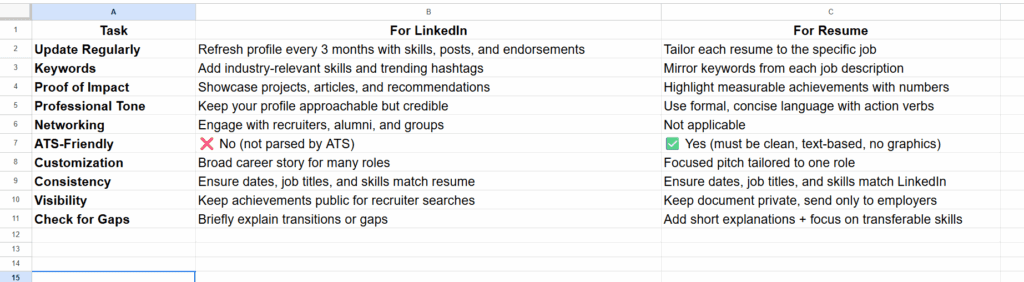
Get A Copy Of A Checklist
FAQs: LinkedIn vs. Resume in 2026
Do I really need both LinkedIn and a resume?
Yes. LinkedIn boosts your visibility and network, while a resume gets you through formal application systems.
Does a LinkedIn profile replace a resume?
No. Most employers still require a resume for applications, especially for roles that use ATS.
How do I optimize my resume for AI and ATS systems?
Use job-specific keywords, clear formatting, and avoid images or graphics that disrupt parsing. Check out 2026 resume guides like 2025 Resume Trends: What’s In, What’s Out, and What Still Works.
Is my information safe on LinkedIn?
Limit sensitive details. Use privacy settings to control who sees your profile, but keep key achievements and contact channels public for recruiters.
How often should I update my LinkedIn and resume?
Review both every few months, or whenever your role, skills, or projects change.
What about employment gaps or career shifts?
Be upfront. Explain changes briefly on LinkedIn and directly on your resume. Focus on skills gained that help with your next steps.
Conclusion
Both LinkedIn and resumes are necessary tools for job seekers in 2026. LinkedIn offers a wider stage helping you get discovered, build relationships, and shape your professional brand. Resumes remain critical for passing automated screens and showing why you fit a specific role.
If you want to win more interviews and stay ahead of the competition, keep both up to date, consistent, and tailored to your goals. In a world where employers view both before they make a hire, it’s obvious: you must have both a slick LinkedIn and a focused resume to make it in the job market of 2026.
Looking to refine your own approach? Invest time in optimizing both, and you’ll see real results—no matter where your next role takes you.
For More Information Visit JustHr